Meta Ads for E-commerce in Bangladesh: How We Drove 349 Website Purchases at $4.90 Per Sale
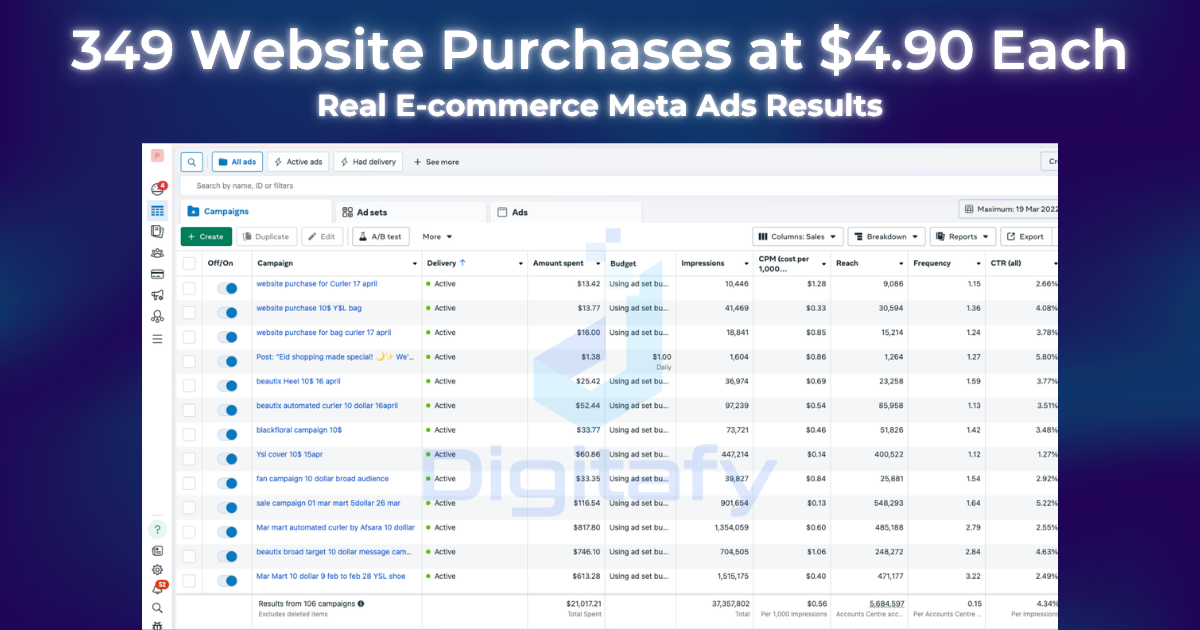
Getting messages through Meta ads in Bangladesh is relatively straightforward. Getting actual website purchases is a different challenge entirely. It requires a properly set up pixel, a website that converts, and a campaign structure specifically designed for purchase optimization.
This is the story of how we ran a website purchase campaign that generated 349 sales at a cost of $4.90 per purchase, spending $1,710.52 in total.
Why Website Purchases Are Harder Than Messages
In Bangladesh, most Meta ads are optimized for messaging conversations. Customers message the brand, have a conversation, and then buy. This works well but it has limitations. It requires a sales team to handle every conversation. It doesn't scale easily. And it makes tracking revenue and calculating ROAS accurately very difficult.
Website purchase campaigns bypass the conversation step entirely. The customer sees the ad, clicks through to the product page, and completes the purchase directly. This scales much better and gives you clean, trackable revenue data.
The challenge is that it requires more infrastructure. Your website needs to load fast, look trustworthy, have a smooth checkout process, and accept payment methods your customers actually use. The Facebook Pixel needs to be properly installed and tracking purchase events accurately.
The Campaign Setup
For this campaign, we were selling a product at a price point where $4.90 per purchase made strong business sense. The campaign objective was set to website purchases specifically, telling Meta's algorithm to find people most likely to complete a transaction.
We built the target audience using a combination of interest targeting and lookalike audiences created from previous purchasers. Lookalike audiences based on past buyers are consistently among the most valuable audiences for purchase campaigns because Meta finds new people who behave similarly to your existing customers.
The pixel had sufficient purchase event data from previous campaigns to give Meta's algorithm strong signals to optimize from. This is why pixel data accumulation matters so much over time. The more purchase data your pixel has, the better Meta can find new buyers.
Creative Strategy for Purchase Campaigns
Creative for purchase campaigns needs to be different from creative for messaging campaigns. When you want someone to click through and buy directly, the ad needs to do more work.
Price transparency is critical. Showing the price clearly in the ad reduces friction at the purchase stage. People who click already know what they're going to pay.
Product clarity is essential. The customer needs to understand exactly what they're buying from the ad itself. There should be no confusion about what the product is, what it looks like, and what it does.
Social proof helps significantly. Including review counts, star ratings, or brief testimonials in the creative increases purchase confidence for people who haven't bought from you before.
A clear, specific call to action that says "Shop Now" or "Buy Now" rather than generic "Learn More" buttons signals the intent of the campaign clearly.
The Numbers in Detail
Total spend: $1,710.52
Total purchases: 349
Cost per purchase: $4.90
For context, $4.90 per website purchase in Bangladesh is an extremely efficient result. For products priced above $15 to $20, this represents a strong positive ROAS. For products with good margins, the return on this campaign would be substantial.
The campaign ran with a sales objective and Advantage+ catalog features that allowed Meta to dynamically show the most relevant products to each individual user based on their browsing behavior and interests.
What Made This Campaign Perform
Several factors contributed to the efficiency of this campaign.
The pixel data quality was high. Years of purchase tracking meant Meta had strong signals to optimize from. New ad accounts without pixel history consistently see higher costs per purchase until the pixel accumulates enough data.
The product had clear market demand. Running purchase campaigns for products that people actively want to buy is much easier than trying to create demand for something new. Understanding search and purchase intent before allocating budget to purchase campaigns is important.
The website checkout experience was smooth. A common reason purchase campaigns underperform is a poor checkout experience. Slow loading, complicated forms, limited payment options, or a design that doesn't inspire trust will kill conversion rates regardless of how good the ad is.
Retargeting layers were active. Running retargeting campaigns alongside cold audience campaigns means that people who clicked but didn't buy were served follow-up ads. This recaptures a portion of the traffic that would otherwise be lost.
Building Toward Website Purchase Campaigns
If you're currently running only messaging campaigns and want to move toward website purchase optimization, here is the path.
First, make sure your Facebook Pixel is properly installed and tracking all relevant events including page views, add to cart, initiate checkout, and purchase. This data is essential.
Second, ensure your website is genuinely ready to convert. Mobile speed, payment options, and trust signals matter enormously.
Third, start with a modest budget and let the pixel accumulate purchase data. The first 50 purchases are the most important because they give Meta enough signal to start optimizing effectively.
Fourth, build lookalike audiences from your purchasers as soon as you have enough data. These will become your highest-performing audiences over time.
Final Thoughts
Website purchase campaigns represent the most scalable form of Meta advertising for e-commerce brands. They remove the bottleneck of a sales team, produce clean trackable revenue data, and become more efficient over time as pixel data accumulates.
Getting them right requires investment in the technical foundation, the right creative approach, and patience while the algorithm learns. But when they work, as this campaign shows, the results can be extremely strong.
If you want to build a website purchase campaign strategy for your e-commerce brand, reach out to Digitafy at digitafy.com.