How to Build a Brand on Meta Ads: Lessons From Managing a Fashion Brand From Zero to Scale
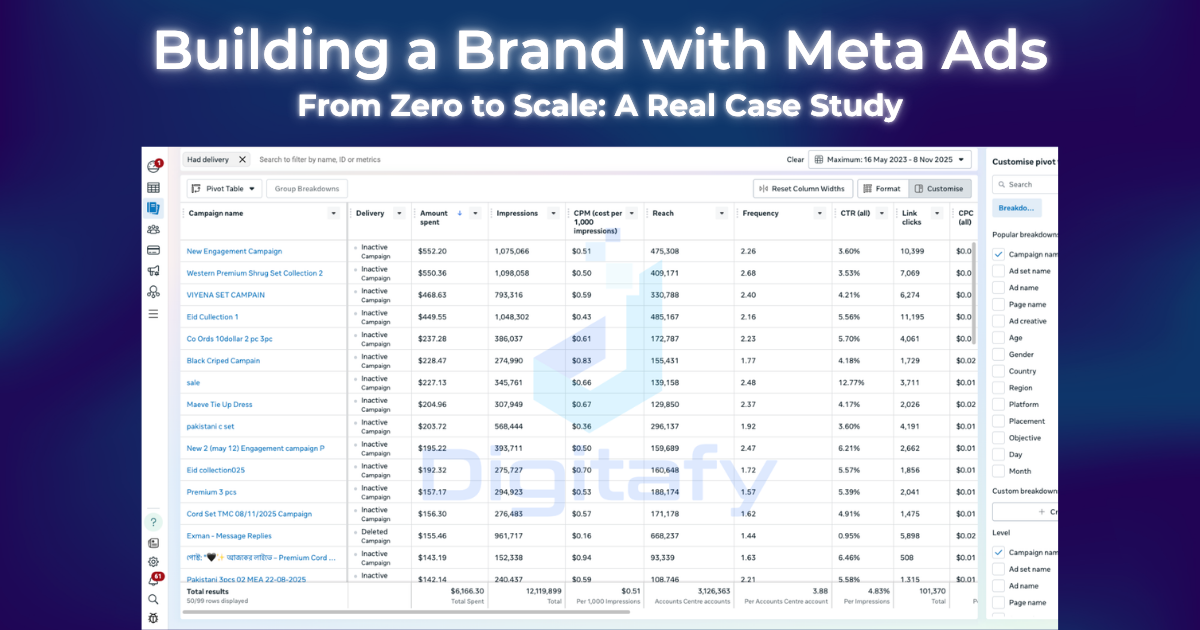
There is a significant difference between running ads that generate immediate sales and building a brand through paid advertising. Most businesses focus entirely on the former and neglect the latter. The ones that figure out how to do both simultaneously are the ones that compound their growth over time.
This is what we learned from managing a fashion brand's Meta advertising journey across multiple years, from early engagement campaigns through to a mature operation generating millions of impressions at scale.
The Early Stage: Building Foundations
Every brand's Meta advertising journey starts the same way. A new ad account with no pixel data, no custom audiences, and no historical performance for the algorithm to learn from.
In the early stage the goal is not maximum efficiency. The goal is data accumulation and audience building. This requires a willingness to invest in campaigns that build long-term assets even when immediate ROAS is not the primary metric.
For this brand, the early campaigns were primarily engagement and video view focused. Low CPMs meant we could reach large audiences cheaply and begin building the custom audiences that would power more efficient campaigns later.
The pixel was installed from day one and configured to track every meaningful event. Every page view, every add to cart, every purchase was being recorded even when volumes were low. This data would become increasingly valuable as the account matured.
The Growth Stage: Building Momentum
As pixel data accumulated and custom audiences grew, campaign performance began to improve organically. Lookalike audiences built from engaged users and purchasers started outperforming interest-based targeting. Retargeting campaigns targeting people who had seen previous content converted at lower costs than cold audiences.
During this stage we expanded the campaign mix to include direct response campaigns alongside the awareness work. Messaging campaigns converted warm audiences built through earlier video and engagement campaigns. The funnel was starting to work as designed.
One of the key decisions during this stage was maintaining investment in top-of-funnel campaigns even as direct response campaigns started delivering results. Many brands make the mistake of cutting awareness spending as soon as conversion campaigns start working. This eventually starves the top of the funnel and causes conversion performance to decline months later.
Consistent top-of-funnel investment throughout the growth stage meant the brand's retargeting pools were always being refreshed with new potential customers.
The Scale Stage: Compound Efficiency
By the time the account had accumulated significant history, the efficiency gains from early investment were clearly visible.
Campaigns that would have cost $0.30 per message in the early stage were now delivering conversations at $0.10 to $0.15. Purchase campaigns that required extensive testing and optimization early on were now delivering consistent results because the pixel had learned so precisely who the brand's buyers were.
The brand's awareness in its target market had grown to the point where cold audience campaigns performed better than they had initially because some portion of new audiences had already encountered the brand organically or through previous campaigns. Brand familiarity reduces friction at every stage of the conversion process.
At this stage the challenge shifted from building performance to maintaining it. Creative fatigue management became more important. Audience expansion to prevent saturation became a regular strategic consideration. The operational complexity of managing a large, mature account required more sophisticated systems.
What Brand Building Through Meta Ads Actually Requires
Looking back across the full journey, several things stand out as having been most important.
Patience with top-of-funnel investment. The brands that grow fastest on Meta are the ones willing to invest in awareness and audience building even when it doesn't produce immediate measurable returns. The compounding effect of this investment takes months to become visible but is unmistakable in the data over longer timeframes. Consistent creative production. Brand building requires a consistent stream of high-quality content. Brands that invest in creative production as an ongoing function rather than occasional bursts maintain performance more consistently over time. Pixel data as a strategic asset. The brands that are hardest to compete with on Meta are the ones with years of rich pixel data. This advantage grows over time and cannot be shortcut. Starting early and maintaining proper tracking is essential. Integration between brand and performance objectives. The most successful approach combines brand-building campaigns that build awareness and audiences with performance campaigns that convert those audiences efficiently. Treating these as separate and competing budget items rather than complementary parts of a single strategy leads to suboptimal results.The Long-Term Perspective
Meta advertising is often discussed in terms of immediate returns. ROAS, cost per result, return on ad spend in the current period. These metrics matter but they tell an incomplete story.
The brand we managed from early stage to scale is now able to reach millions of people with every major campaign launch because of the audiences, pixel data, and brand familiarity built over years of consistent advertising. New competitors entering the market with similar products face a much harder challenge building that same infrastructure.
This is the real long-term value of Meta advertising done correctly. Not just the sales generated in any given month but the compounding brand and data assets that make every future campaign more efficient than the last.
What This Means for Where You Are Right Now
If you are in the early stage of Meta advertising, focus on building the right foundations. Pixel setup, audience building, and top-of-funnel investment now will pay dividends for years.
If you are in the growth stage, resist the temptation to cut awareness spending as direct response campaigns improve. Keep feeding the top of the funnel.
If you are already at scale, invest heavily in creative production and audience expansion to sustain the performance your early investments have built.
At Digitafy, we think about Meta advertising in terms of long-term brand and data asset building, not just short-term campaign performance. If you want to build a Meta ads strategy designed to compound over time, reach out at digitafy.com.